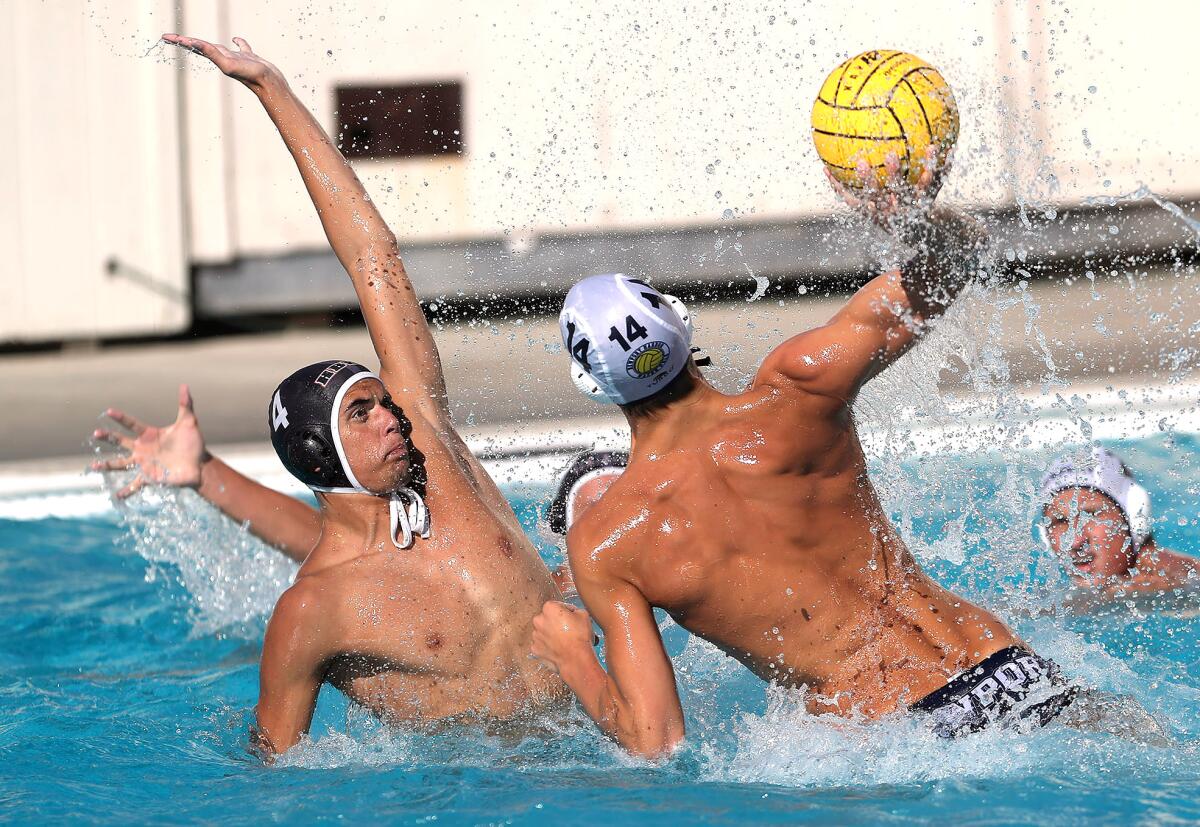

Imagine a hybrid combination of soccer, swim, wrestling, & rugby. Now you don’t have to imagine, because that’s exactly what water polo is. Teams of seven go head to head in a deep pool with goalposts to score in. Dubbed by many as the “hardest sport in the world” due to the technical skill needed to handle the ball, the core strength & endurance needed to tread water for minutes on end, and the need to swim faster than the opponent to gain an advantage. Before I go into its place in Eisenhower and also potentially in your life, here’s a quick rundown of how the game works:
Rules & Positions
The rules are simple. Seven players including a goalkeeper play four quarters of seven minutes each in two halves, totaling 28 minutes of play time (while the clock is running.) Water polo is played in deep pools where players have to rely entirely on their ability to tread water, generally using the eggbeater kick, or swim without any boost or push. Players sprint (swim really fast) from their ends of the pool to the half to determine who will get the ball at the start of each quarter, where the real games begin.
Fouls in water polo are separated into three categories: ordinary fouls, major fouls, and brutality fouls. Ordinary fouls constitute a free throw, major fouls generally end in penalties, and brutality fouls end up in ejections.
The point is the main playmaker & goal defender of the team. They’re right in front of the goal on defense and in the middle of the half on offense.
The set, or the center forward, is the goal scorer and driving force of the offense. Generally taken up by the tallest & biggest players, they are in the half on defense, right in front of goal on offense.
The wings, or drives, are the players that bring up the ball and beat their man to make crosses in or corner shots. They’re on each left and right and closest to the goal on offense, near the half w/ the point on defense.
The flats, or sets, work similarly to the wings. However, they are the more defense oriented versions of wings as they are the ones that have to deal with the opposing team’s wings, generally the fastest players on the team.
Altogether, these positions synergize to move the ball up the pool and coordinate to make passes and shots on goal. The next section of this article will go over exactly how teams can move the ball up on offense or prevent a goal scoring opportunity on defense.
Strategies & Tactics
Water polo has space for a lot of individual creativity when it comes to how players can move the ball up and shoot the ball. The water polo ball has a very specific texture akin to the concrete decks next to the pool that are super coarse and rough to help your hands grip onto the ball while it gets super wet, and in turn can create some crazy ways to beat your opponent.
Additionally, tactics and maneuvers on offense & defense can be used to either create separation or move in a way to be able to react quickly.
Basic tactics on offense include the “umbrella” defense, where offensive players are lined up in a semi circle around the five and two meter lines to get around press defenses. Individual strategies can include feigning a burst forward to actually move backward and create separation to receive a pass.
Basic tactics on defense include zone defenses where players switch positions according to how the offense moves, and individual strategies include the “crab” maneuver, where defensive players raise their hips in anticipation of an offensive player’s burst one direction or the other. This maneuver makes it easier to catch up laterally.
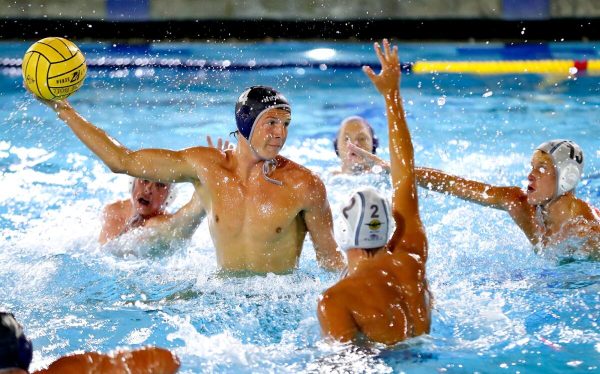
A water polo player rises from the water to attempt a shot while surrounded by defenders.
Training
Most polo teams have a very challenging training regimen as the sport itself takes a lot of discipline and constant movement repeated over time. The most important values taught in these training sessions are technique, communication, and consistency.
Many high school programs are very beginner friendly and teach you the basics of not only handling a polo ball, but also swimming. Since the eggbeater kick and proper freestyle technique is not common knowledge, it often coincides with training.
Technique commands how you throw the ball, pass the ball, and swim. You can be an excellent shooter, an excellent visionary and passer, but if you can’t swim with the proper technique you can’t act fast enough to get in positions to pass or score.
Communication shows how you and your team can work together to stay focused and on the same topic. Even if everyone is individually excellent, if there is no game plan going into offense or no set strategy on defense they’re bound to end up bumping into each other and making mistakes.
Consistency is, in my opinion, the most important part of playing polo; especially for the players who end up playing for most of the game. You can have the best first quarter but not being able to be consistent with your technique, endurance, and communication will lead you to be a huge liability.
The most common ways to improve these abilities are through the use of weighted belts, parachutes, and otherwise weighted objects. These function to make things feel easier when they come off and help you improve.
Benefits Physically & Mentally
Water polo benefits you in a variety of physical and mental aspects. Through the physical hardening and mental fortitude in the pool, to the lifelong memories and great relationships you make with your teammates; it makes playing on a team an extremely positive experience.
Physically, polo gets you extremely into shape. Constant treading, scissor kicking, and swimming up and down huge pools constantly develops back and leg muscles while burning calories during longer periods of time. Even if you don’t lose fat while training and playing, your endurance will blow through the roof and is extremely beneficial to play before participating in sports like basketball, volleyball, soccer, wrestling, track, etc.
Mentally, polo challenges you to be the best you can be constantly. If you aren’t disciplined at all times to eat properly, train with purpose, and play with consistency, it’s hard to find enjoyment out of the sport. Persevering through discomfort helps you become a better athlete and the amount of exercise you do is beneficial to your mental health. Additionally, the teammates you befriend and the kinds of people you get to meet as opponents all affect you positively and help you be a better person together.
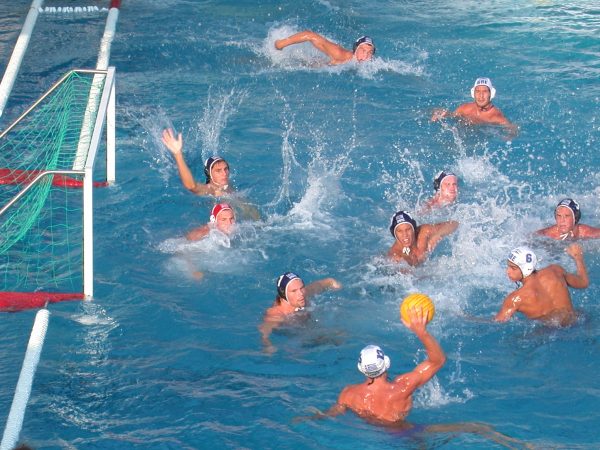
An example of water polo offense and defense in the 5-meter zone.
Eisenhower’s Water Polo Teams
Now that we’ve gone over the general parts of polo, here’s how you can get involved at our very own school and experience the sport for yourself.
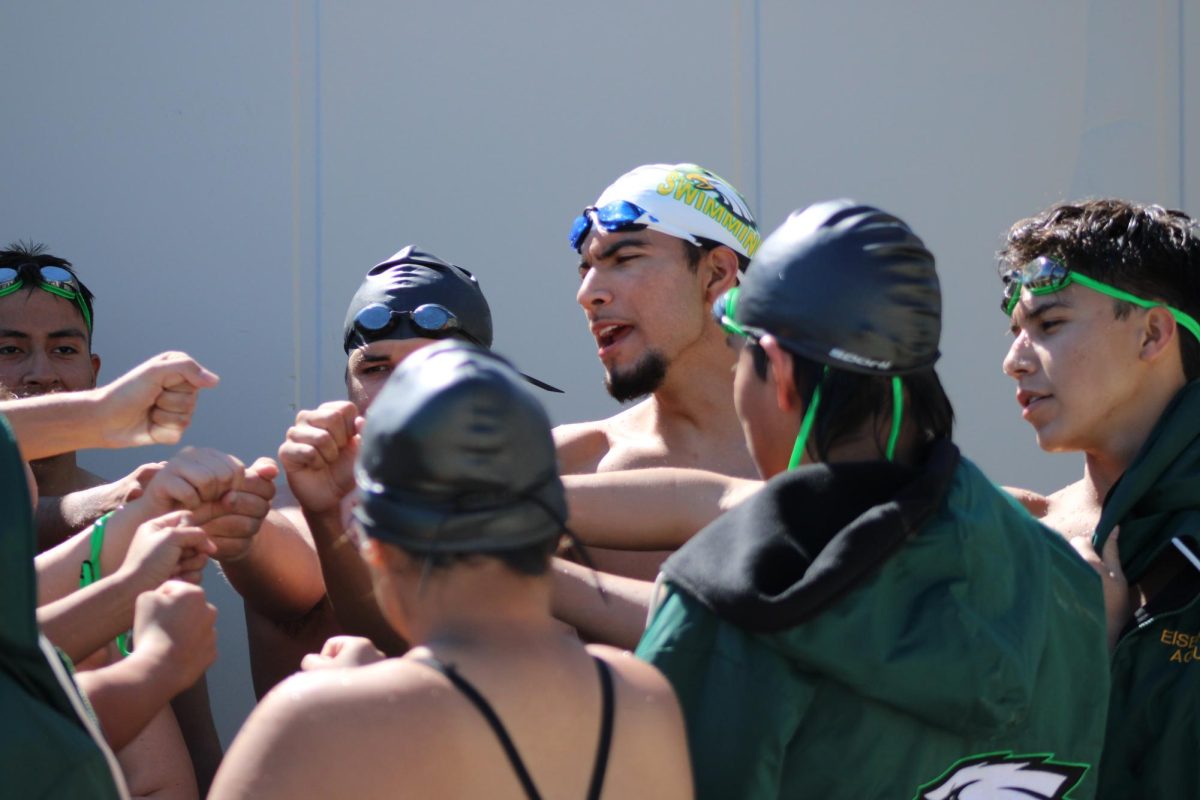
Eisenhower Aquatics offers boys and girls water polo in summer/fall and winter seasons respectively, and co-ed swim in the spring. As of 10/21/2025, they have an Instagram page where you can see information and media about their teams.
(The following information is all as of 10/21/2025.)
Girls & boys polo offers varsity level play and are always looking for new members to at least try the sport out and learn something new. Our team is very beginner-friendly and being able to swim isn’t something you should worry about too much; the training helps you become a better swimmer, floater, treader, and will have you beating your friends in races in no time. They play in the San Andreas league & are coached by experienced polo players. The team generally accepts anybody to join even after the season has started, and provides quality training. Participating in girls & boys polo is an extremely good gateway into building a foundation for succeeding in the swim team later in the year.
Playing polo in high school presents you the opportunities to be scouted by college programs as scouts often attend league/tournament games.
Participation in polo as varsity also gets you a varsity letterman, admittance into pep rallies for their respective season, a banquet at the end of the season, benefits every scholar athlete gets, potential team bonding field trips, & the opportunity to visit other schools and get out of classes early to play a fun sport!
For more information, you can always contact Coach Mo or catch the polo teams convening for practice right afterschool in front of the pool in the fall and winter seasons.
Road to College & Scholarship Opportunities
Water polo is a very valued sport in universities across the US & participating in it shows a lot of virtue in the eyes of college application staff. Many universities, especially in California where polo is the most prominent, have a polo program that offers athletic scholarships to play. The most well known program of these is U.C. Berkeley’s polo program, often times ranked the #1 program in the US.
Participating in polo as a high schooler presents you the opportunity to be exposed to these programs and potentially get scholarships if you are an individual talent or are a part of a winning tradition.
In Review
Even if you aren’t someone who thinks of sports, or thinks water polo wouldn’t be useful to you, I personally believe that it’s a sport everyone should play at least once in their lives. Whether or not it sticks is up to you, but even being able to try it out will open your eyes to a new perspective. One thing I would recommend doing before trying it out is getting yourself swimmers shampoo and conditioner!! Thanks for reading my article on the hardest sport in the world.